From the first site survey to everyday operations, we bring land, power, and project delivery together. Our approach combines AI and robotics with experienced engineers and operators to make the work more efficient and reliable.
Every part of the project. One continuous process.
Connect the whole project. Land, power, capital, permits, and delivery all shape what can be built. Complete brings these responsibilities together, from the first site decision to everyday operations.
Plan for autonomy from the outset. We’re developing modular infrastructure designed for robotic installation and maintenance. Engineers and operators decide where automation helps and where their judgment is needed.
Project development, construction, and operations.
Built for what comes next.
Starting with data centers. Extending the approach to energy generation, battery storage, and automated laboratories.
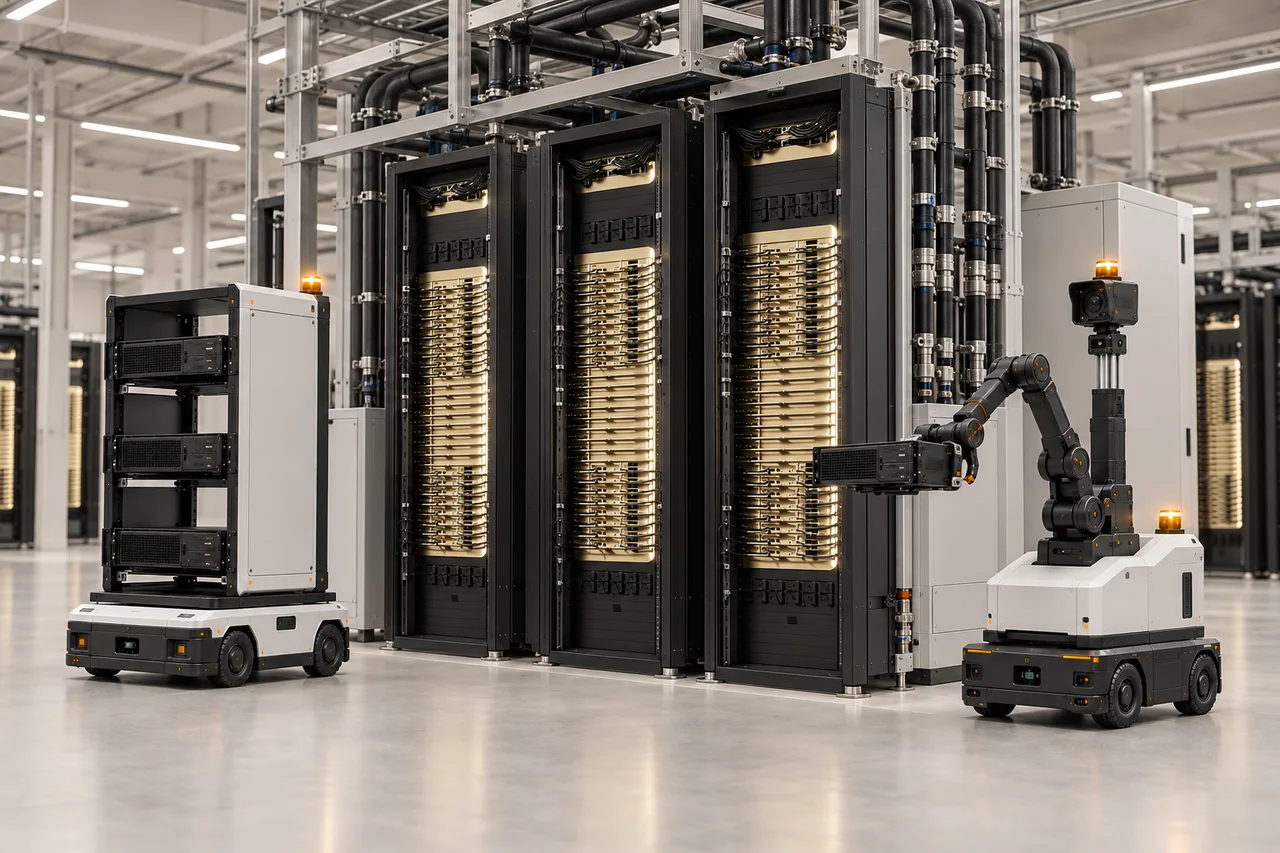
Vera Rubin–style modular AI data-center concept
Our starting point
Capacity that can grow.
Modular data centers designed around dense AI workloads. Plan liquid cooling, power, and connectivity together, then add compute capacity in phases as demand grows.
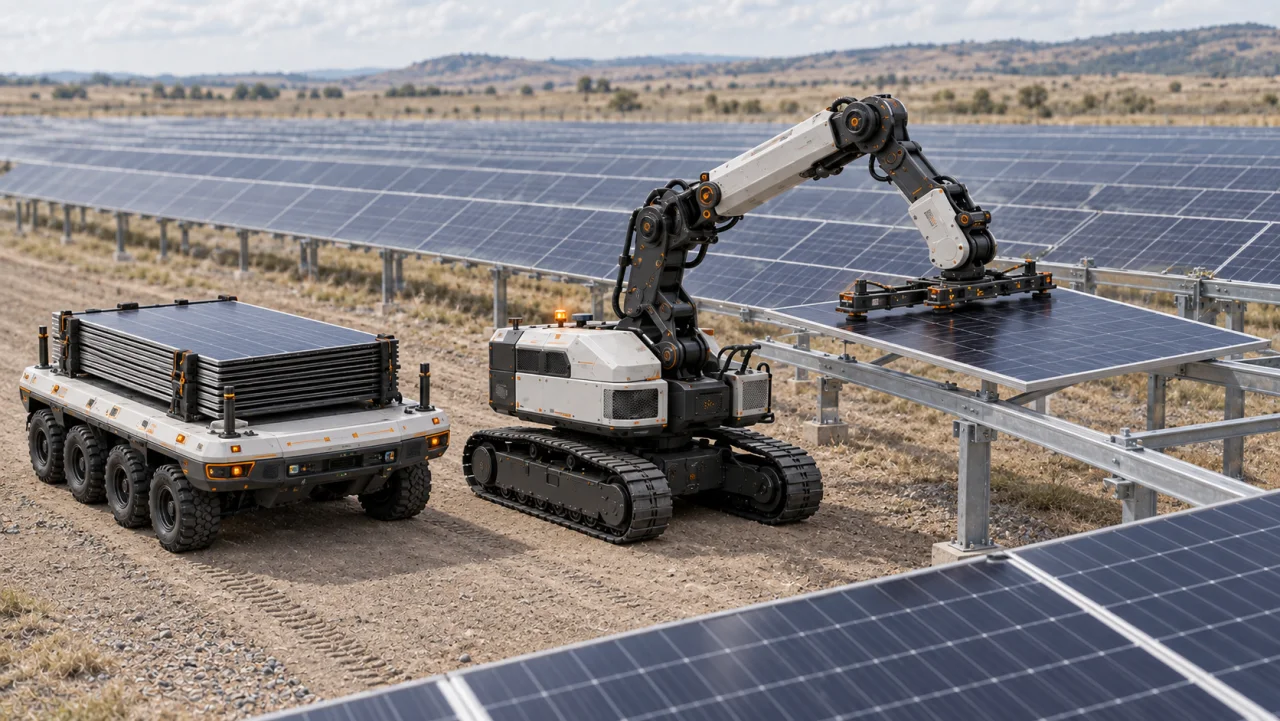
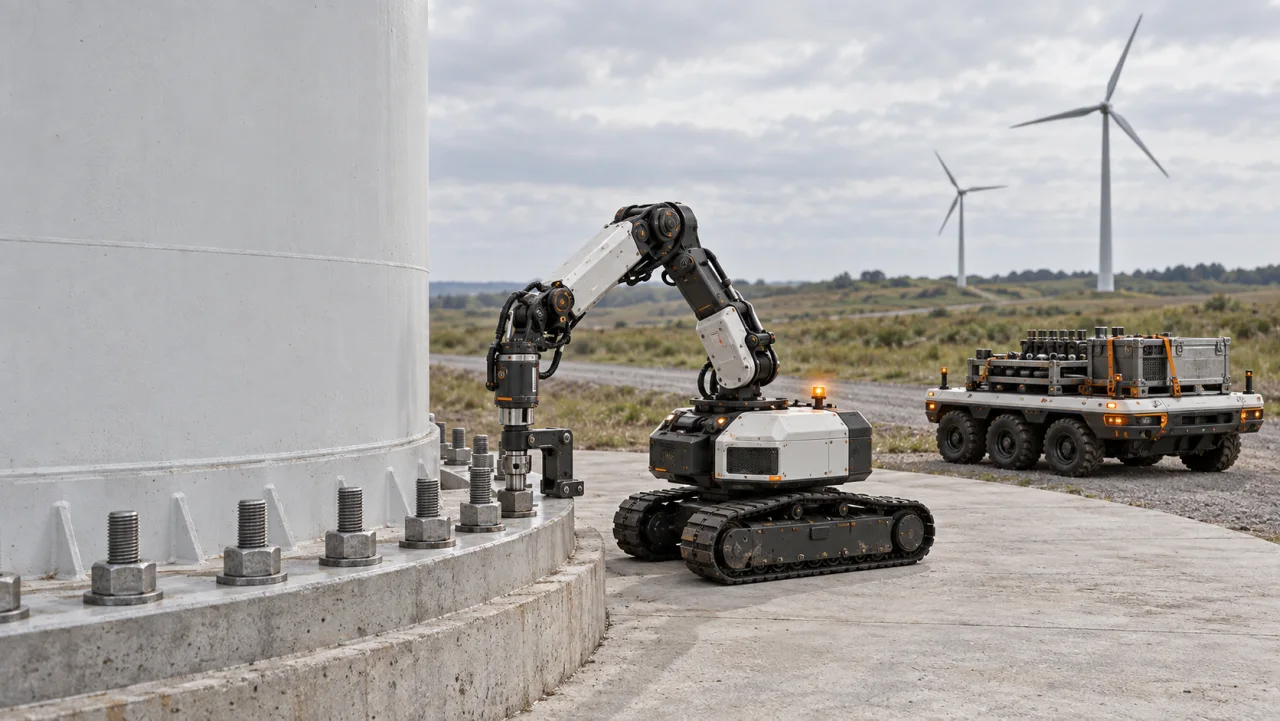
Plan generation around the site, grid connection, and demand it serves. We’re developing robotic installation workflows for solar and wind projects, from placing photovoltaic modules to fastening turbine components.
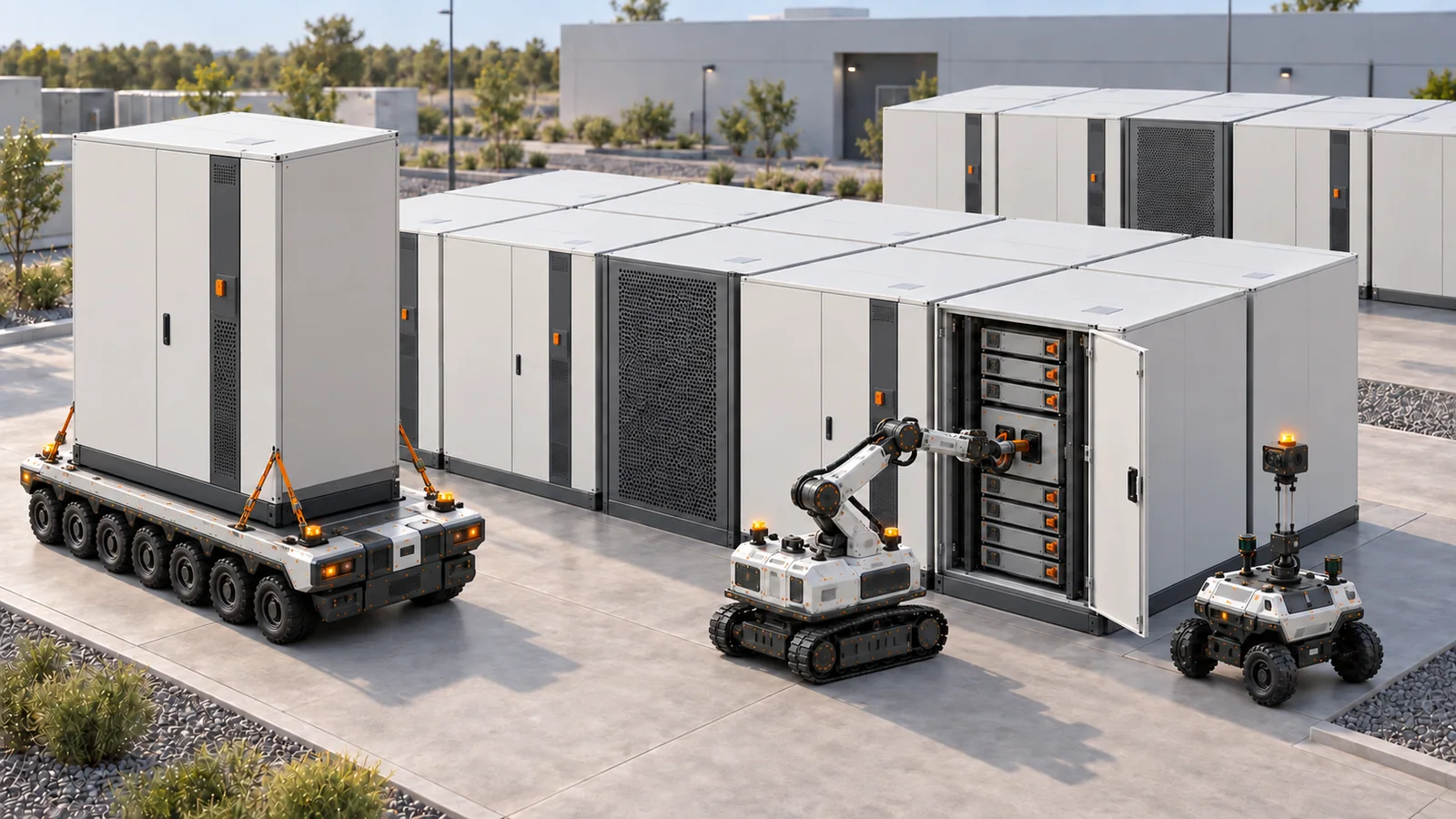
Modular battery energy storage systems (BESS), integrated with grid access and generation around the facility they serve. Size storage in stages, with battery modules, conversion, and controls designed to work together.
SystemsBattery modules, conversion, and distribution
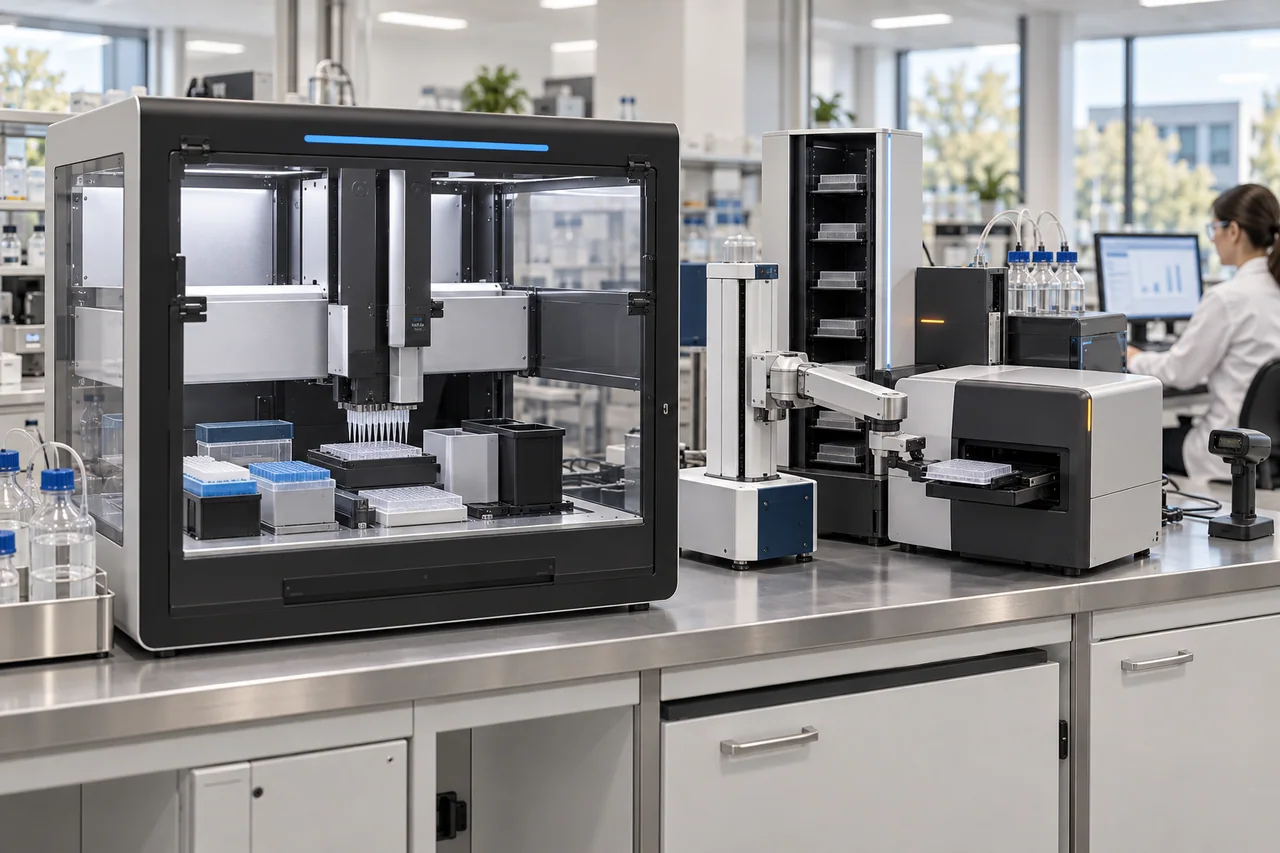
Modular wetlabs built around automated liquid handling, incubation, and measurement. Software connects instruments, sample records, and results; AI supports experiment planning and analysis. Scientists validate methods, review outcomes, and manage exceptions.
InstrumentsLiquid handlers, incubators, and plate readers
WorkflowsRobotic plate transfer and sample tracking
People & AIAssisted planning and scientific review
Follow a data-center project through the complete lifecycle. Commercial, technical, and physical work, connected at every stage.
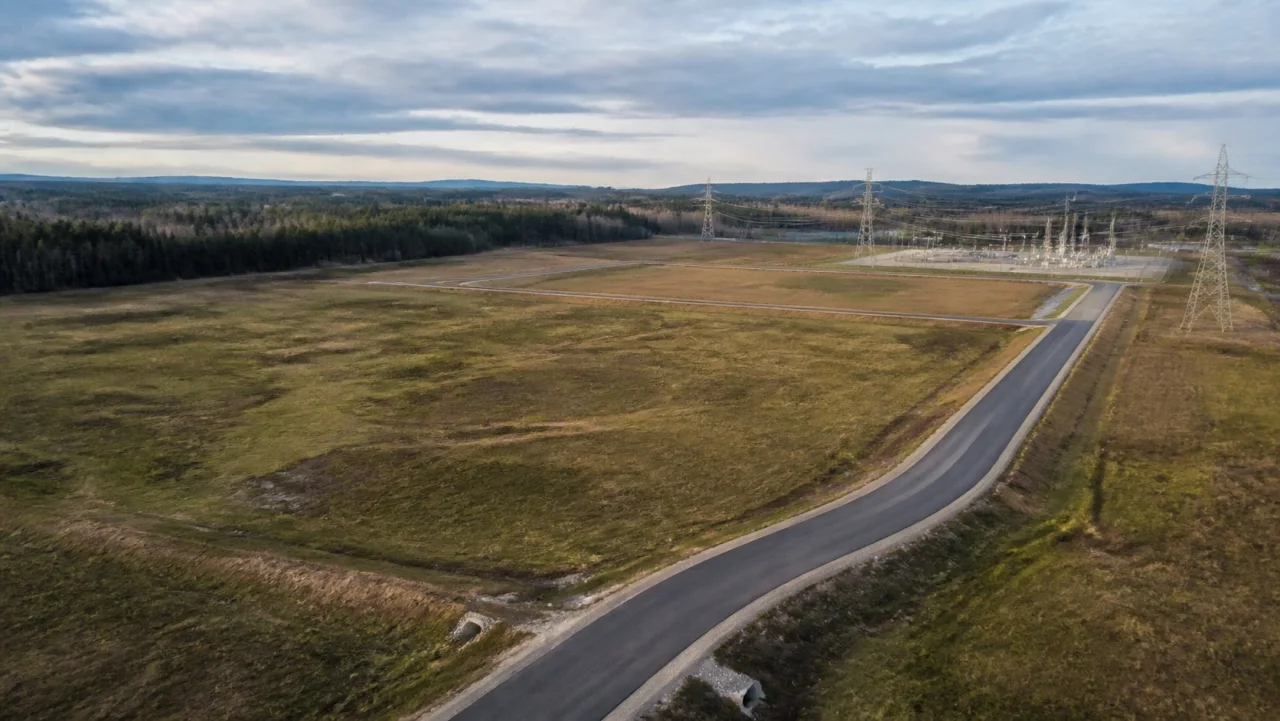
Find the right ground.
A good project starts where land, power, access, and demand meet. Site screening and feasibility connect the commercial opportunity to the conditions on the ground.
Project work
Site selection · Power availability · Access and connectivity · Geotechnical conditions
The robotic role
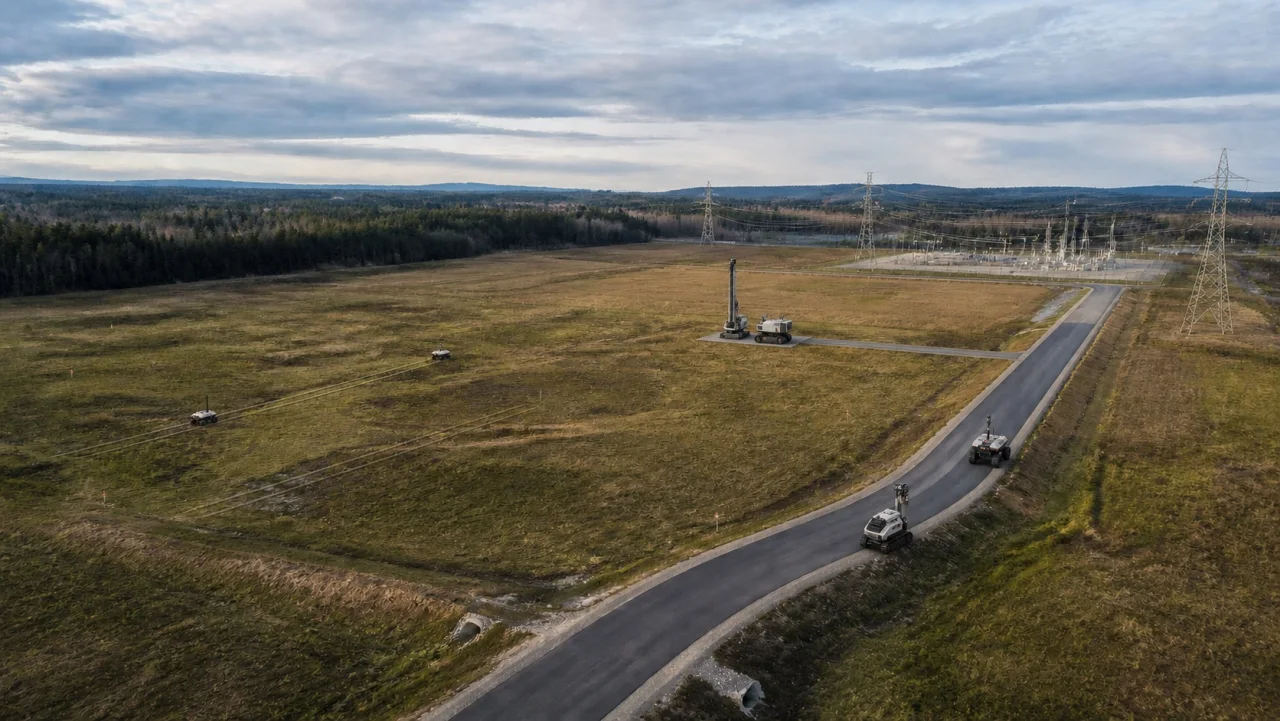
Mapping drones and survey rovers provide measurements of terrain, boundaries, and ground conditions for surveyors to review.
Land, access, and grid context · Concept
Give the project a sound footing.
Create and manage the special purpose vehicle (SPV) that holds the project. Bring site rights, capital, contracts, budgets, and reporting into one accountable structure.
Project work
SPV management · Site control · Capital planning · Contracts and reporting
The robotic role
Survey and geotechnical fleets provide physical evidence for feasibility and diligence. People retain project and capital approvals.
Survey evidence for project diligence · Concept
Resolve the details before delivery.
Coordinate modular facility design, utility requirements, permits, and procurement around a buildable plan. Resolve module interfaces and service access before construction starts.
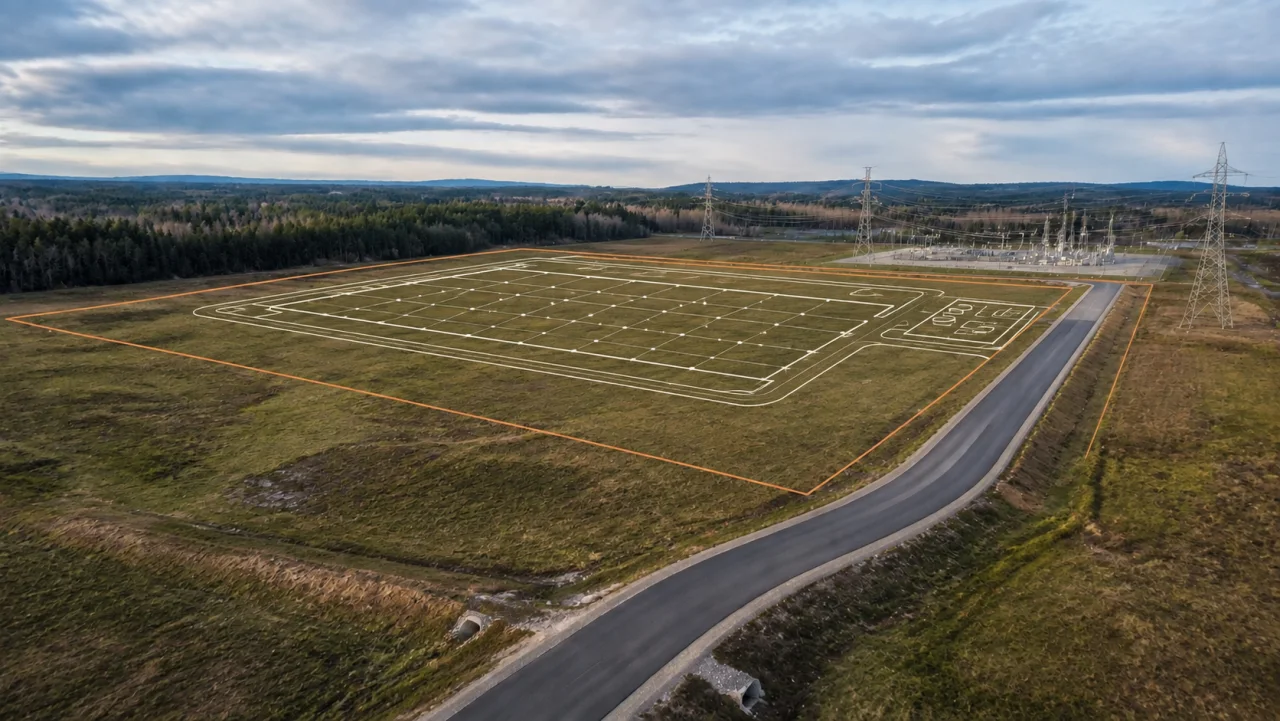
Layout rovers and site scans tie the digital plan to real ground, giving subsequent machines a shared reference.
Proposed layout, before construction · Concept
Turn a plan into a place.
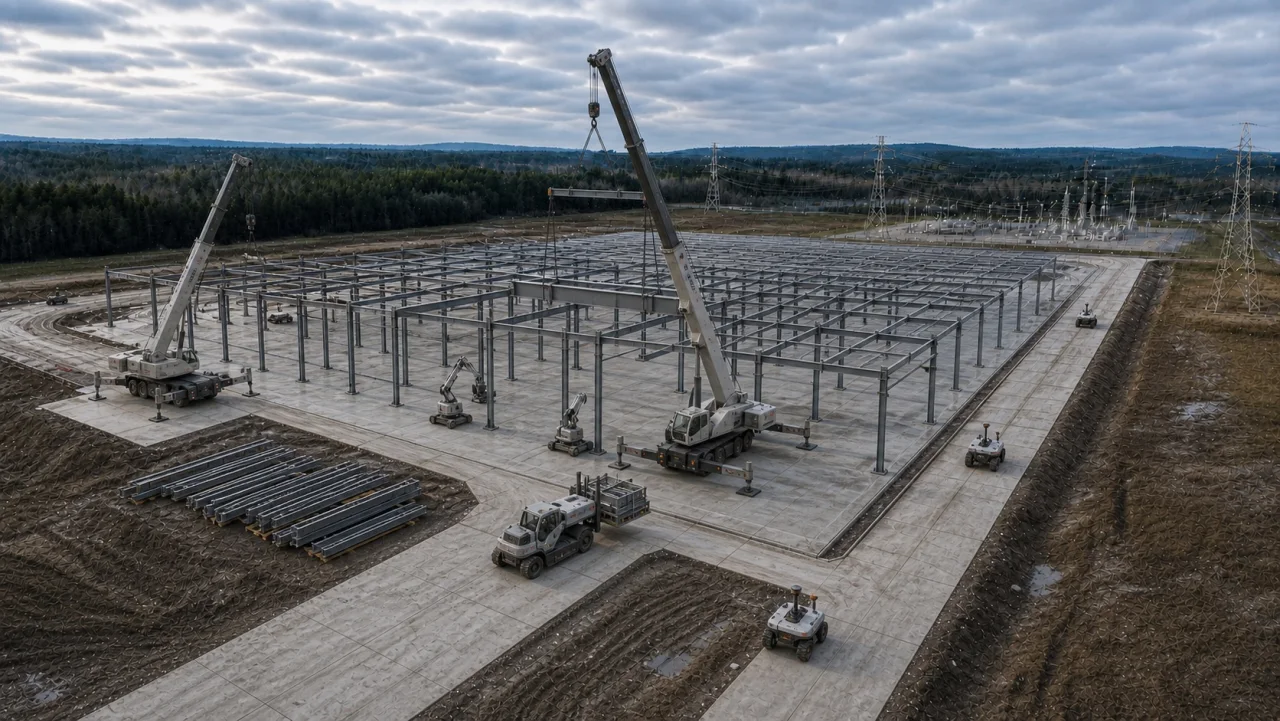
Coordinate civil works, foundations, structural assembly, and the building envelope. Connect suppliers and material flows to the sequence of work on site.
Excavators, concrete systems, cranes, and connection robots each need a defined task, supported loads, and clear working space. AI helps coordinate their sequence of work.
Foundations and structural assembly · Concept
Bring the whole power system together.
Integrate grid supply, storage, distribution, and cooling. Coordinate utility interfaces and testing so the facility is ready for commissioning.
Project work
Grid connection · BESS · Switchgear and transformers · Mechanical systems
The robotic role
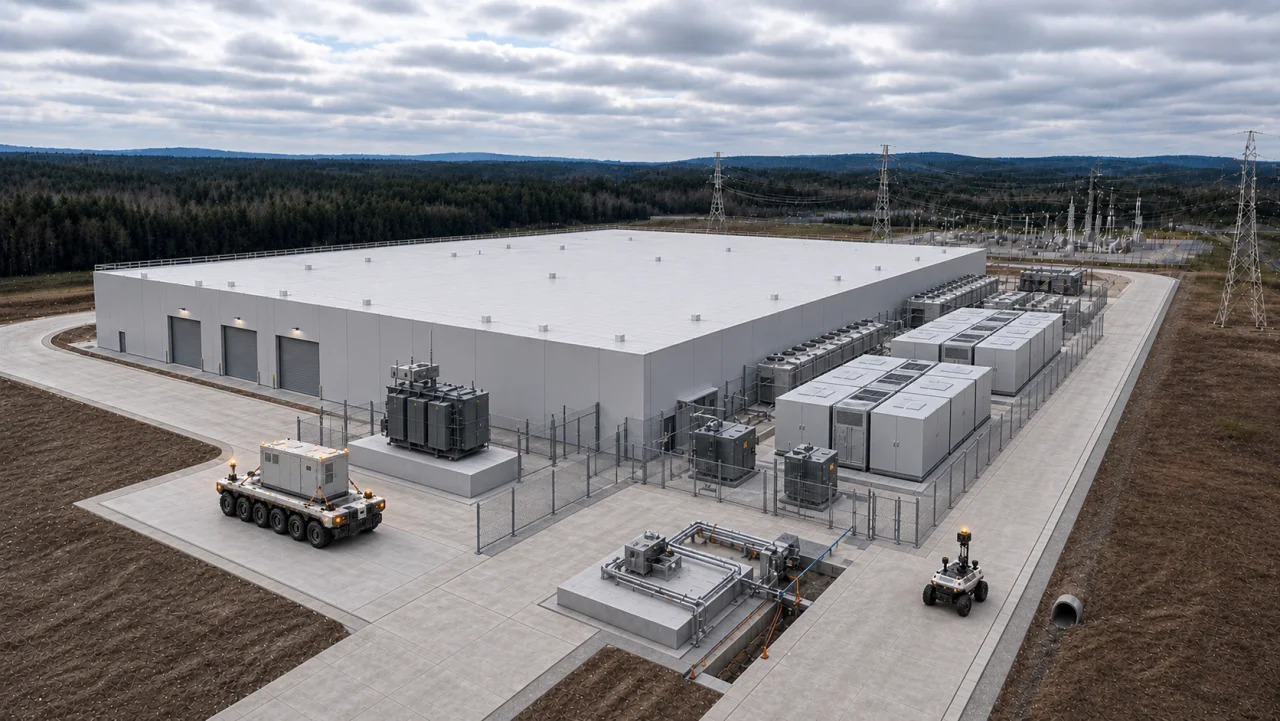
Module transporters, cable-installation robots, and inspection rovers support placement, connection, and verification.
Power, storage, and cooling integrated · Concept
Make readiness measurable.
Receive and install equipment, verify module interfaces, and test the facility as a system. Keep commissioning evidence and handover records with the project.
Project work
Equipment installation · Acceptance testing · Systems verification · Handover
The robotic role
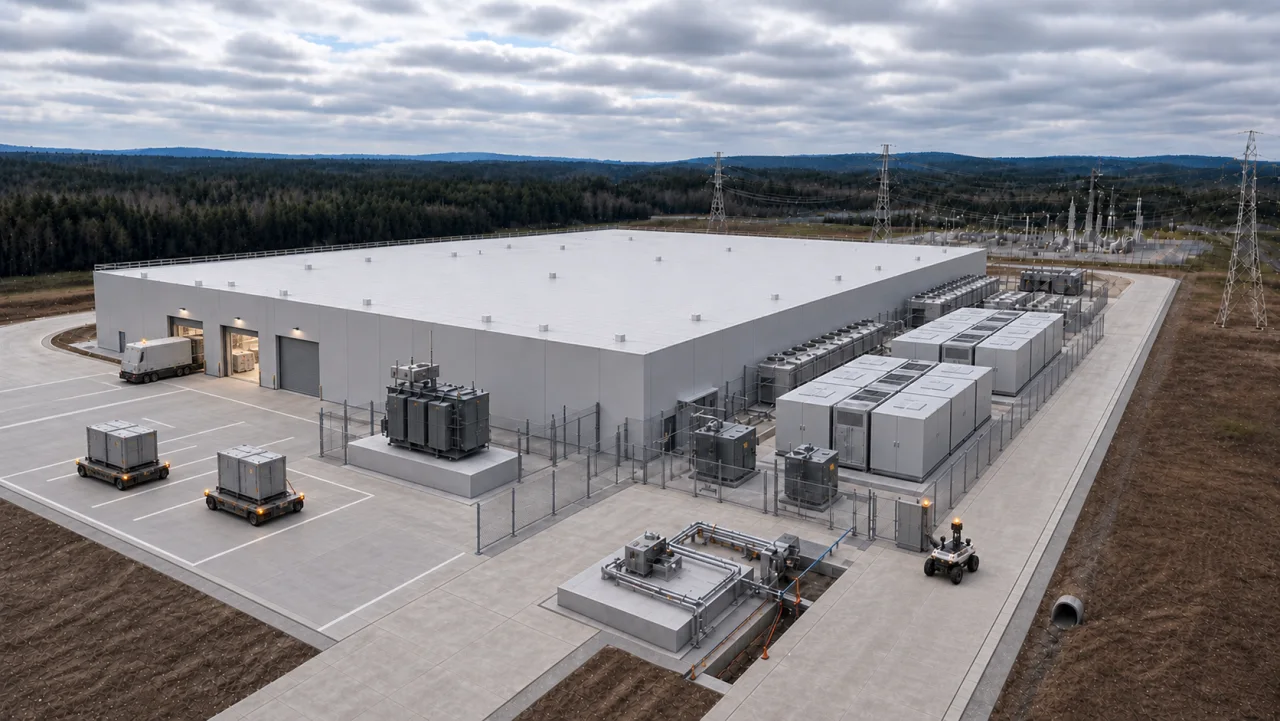
Dedicated transport, connection, and test robots support repeatable installation and checks. Engineers review the results before handover.
Equipment receiving and system checks · Concept
Keep the facility ready for tomorrow.
Connect data center infrastructure management (DCIM) with asset records, power and cooling visibility, maintenance planning, and incident response.
Project work
DCIM · Asset and capacity management · Maintenance · Performance and expansion
The robotic role
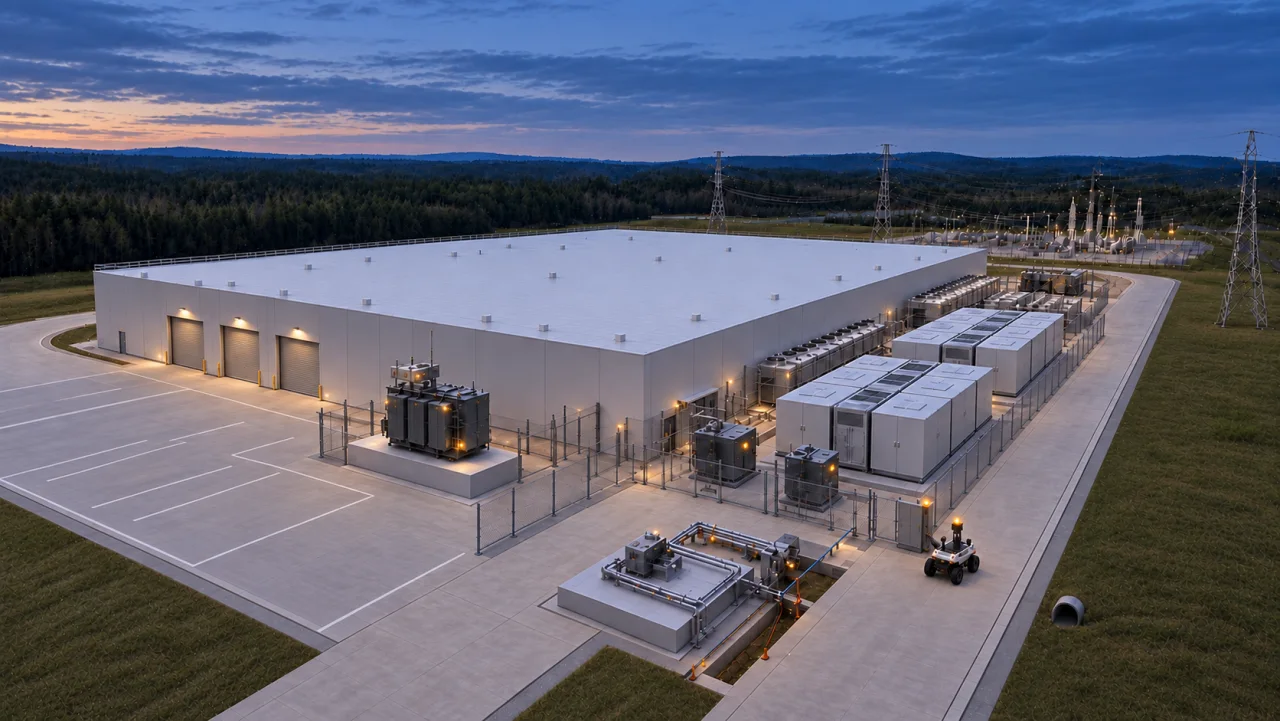
Service robots carry out routine inspections and maintenance. AI helps teams spot changes in operating data, while operators investigate problems and decide what work is needed.
The completed facility in operation · Concept
A connected process. Workstreams can overlap.
Robots with real work to do.
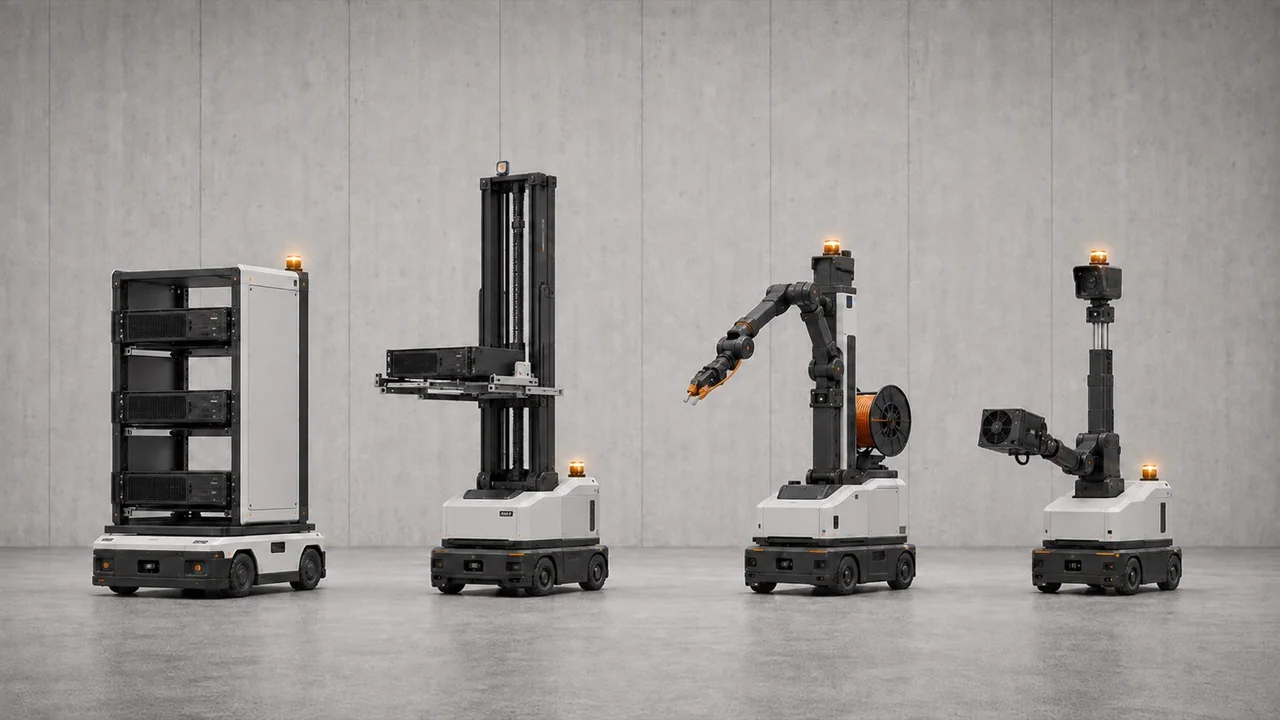
We’re developing physical AI for jobs such as surveying sites, moving materials, connecting equipment, and inspecting installations. Engineers and operators help define the tasks, the equipment needed, and the conditions in which a robot can work reliably.
Transport → Install → Connect → MaintainComplete indoor fleet concept
Designed around the job.
Each machine needs the right tools, enough space to work, and a clearly defined task. We design around those practical requirements.
Part of the whole project.
Survey results should inform the design, and installation records should be useful to the team running the facility. AI helps keep that information connected as the project develops.
People remain responsible.
Engineers and operators set standards, review results, and decide how to handle problems. Their experience also helps us improve the automation.
Concept imagery illustrates our autonomous infrastructure vision. Our current work focuses on data-center development and operations automation.
In development
Teleoperation for HVAC systems.
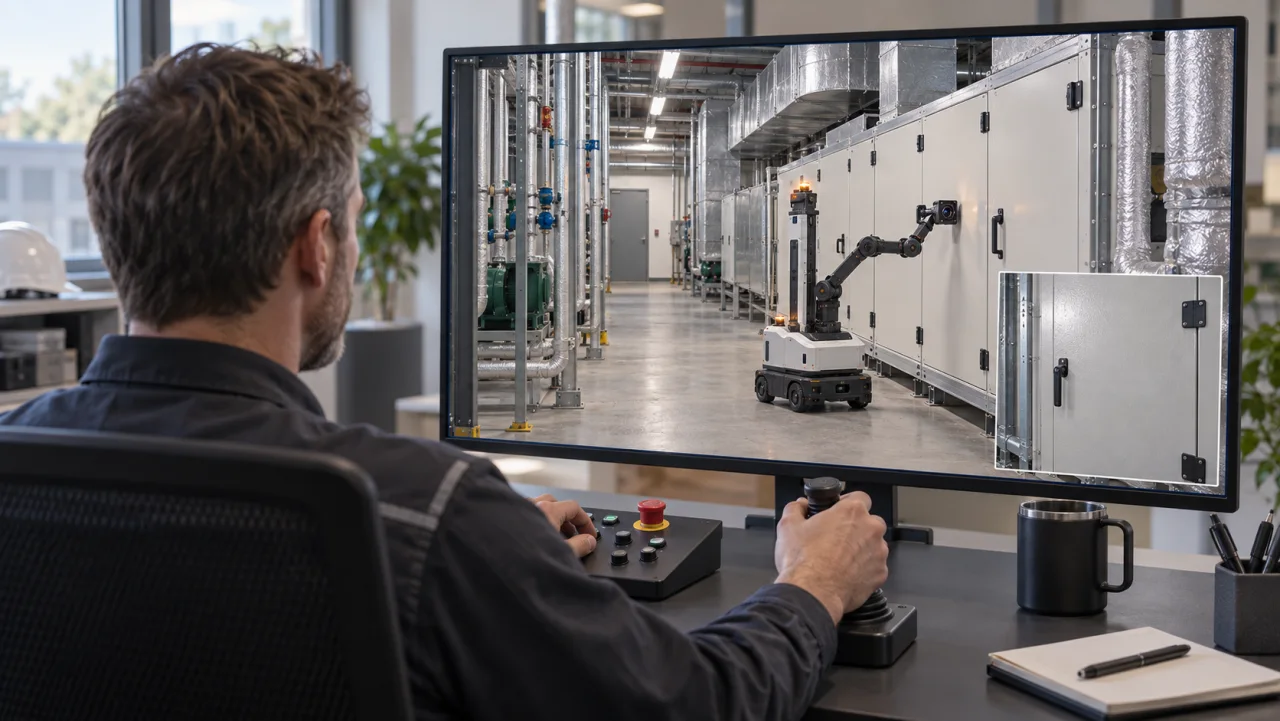
A remote technician guiding HVAC inspection · Concept
We’re developing teleoperation for heating, ventilation, and air conditioning (HVAC). Experienced technicians guide the work remotely, using live video and equipment readings.
Inspect the equipment.
Position cameras and probes around air handlers, ductwork, valves, and cooling equipment for a closer view of conditions on site.
Support commissioning.
Guide functional checks, compare readings with the expected response, and keep observations with the commissioning record.
Guide routine service.
Assess filters, dampers, and valves, then direct supported tasks. The technician chooses the tools, guides movement, and verifies the result.
Remote guidance. On-site support. The operator guides the task; the site team prepares the equipment and handles work that needs a person on location.
Complete develops infrastructure, starting with data centers and operations automation. We’re working on how AI and robotics can help experienced teams deliver projects and keep facilities running. Over time, we plan to apply the same approach to solar and wind generation, battery storage, and laboratories.
Complete Robot Inc. · San Francisco
Starting scale
0.5–10 MW data-center projectsInitial projects with site and power origination, modular delivery, and operations planned together.
Building from
HF0 · Summer 2026Part of the Summer 2026 batch, working on infrastructure deployment and operations-automation workflows.
The direction
Integrated AI factoriesCompute, power, operations, and physical automation, developed as one connected system.
Something worth building together.
Looking for compute capacity, bringing a site or power opportunity, or interested in the work? Choose a starting point below and tell us what you have in mind.
Compute customers
Bring your capacity, location, power density, and timing requirements.